Verifying Victory: Backend Checks That Secure Sweepstakes Prize Claims
Ines Richter · Oct 18, 2026
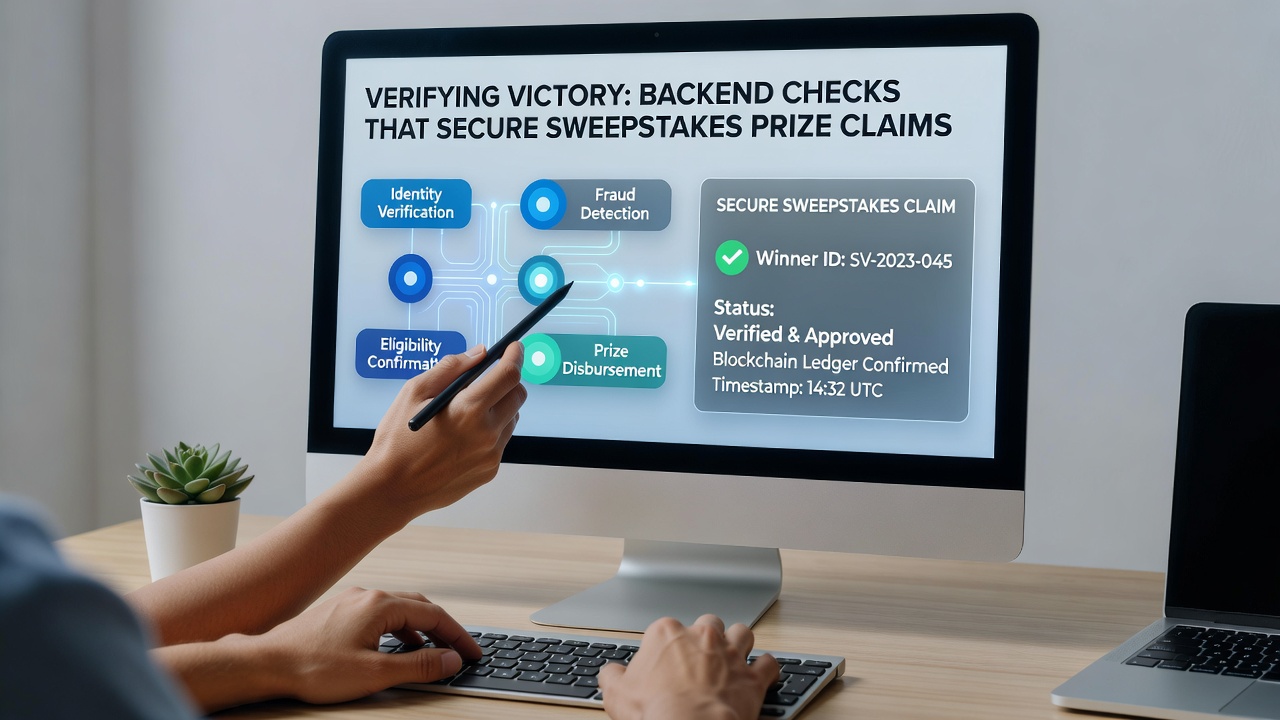
Backend Verification Layers That Authenticate Sweepstakes Prize Awards
Sweepstakes operators rely on layered backend systems to confirm that prize claims meet every eligibility requirement before any funds transfer occurs. These systems cross-reference entry records against user accounts, geographic restrictions, and prior win histories while running automated fraud scans that flag duplicate submissions or suspicious patterns. Data from multiple platforms shows that such checks reduce erroneous payouts by significant margins each year. Eligibility confirmation begins the moment a claim arrives. Backend scripts pull the original entry timestamp, compare it against contest rules stored in the central database, and verify that the claimant matches the registered account details exactly. Age verification modules query third-party identity services to ensure compliance with minimum age thresholds, and address checks confirm that the winner resides within permitted jurisdictions. When mismatches appear the claim pauses automatically for manual review. Fraud detection engines operate continuously in the background. They analyze IP address histories, device fingerprints, and behavioral signals such as rapid successive entries from the same location. Machine learning models trained on past claim data identify anomalies that human reviewers might miss, then route suspect cases to a dedicated security queue. Operators report that these automated filters catch the majority of invalid attempts before they reach payout stages.
Sweepstakes operators rely on layered backend systems to confirm that prize claims meet every eligibility requirement before any funds transfer occurs. These systems cross-reference entry records against user accounts, geographic restrictions, and prior win histories while running automated fraud scans that flag duplicate submissions or suspicious patterns. Data from multiple platforms shows that such checks reduce erroneous payouts by significant margins each year. Eligibility confirmation begins the moment a claim arrives. Backend scripts pull the original entry timestamp, compare it against contest rules stored in the central database, and verify that the claimant matches the registered account details exactly. Age verification modules query third-party identity services to ensure compliance with minimum age thresholds, and address checks confirm that the winner resides within permitted jurisdictions. When mismatches appear the claim pauses automatically for manual review. Fraud detection engines operate continuously in the background. They analyze IP address histories, device fingerprints, and behavioral signals such as rapid successive entries from the same location. Machine learning models trained on past claim data identify anomalies that human reviewers might miss, then route suspect cases to a dedicated security queue. Operators report that these automated filters catch the majority of invalid attempts before they reach payout stages.Multi-Layer Authentication Sequences
Once initial filters clear a claim, additional authentication steps activate. Two-factor verification sends codes to the registered email and phone number, while document upload portals request government-issued identification for larger prizes. Backend reconciliation routines then match the uploaded files against previously stored records using optical character recognition and biometric cross-checks where available. Account linkage reviews examine whether the winner has multiple profiles across affiliated sites, a common vector for rule violations. Systems log every access attempt and compare it against known patterns of shared credentials. When discrepancies surface, the claim status changes to pending and triggers an alert to compliance teams.Integration With External Data Sources
Modern platforms connect directly to regulatory databases and credit bureaus to validate identity details in real time. These connections allow instant confirmation of legal name, address history, and any outstanding restrictions that could disqualify a claimant. Integration logs show response times averaging under three seconds for most queries, keeping the overall process efficient. One case documented by industry analysts involved a platform that detected a winner attempting to claim under an alias previously flagged in another jurisdiction. The backend comparison across shared industry watchlists halted the payout and referred the matter for further investigation.