The Feedback Loop of Announced Wins in Digital Prize Events
Gisela Koch · Nov 1, 2026
The Feedback Loop of Announced Wins in Digital Prize Events
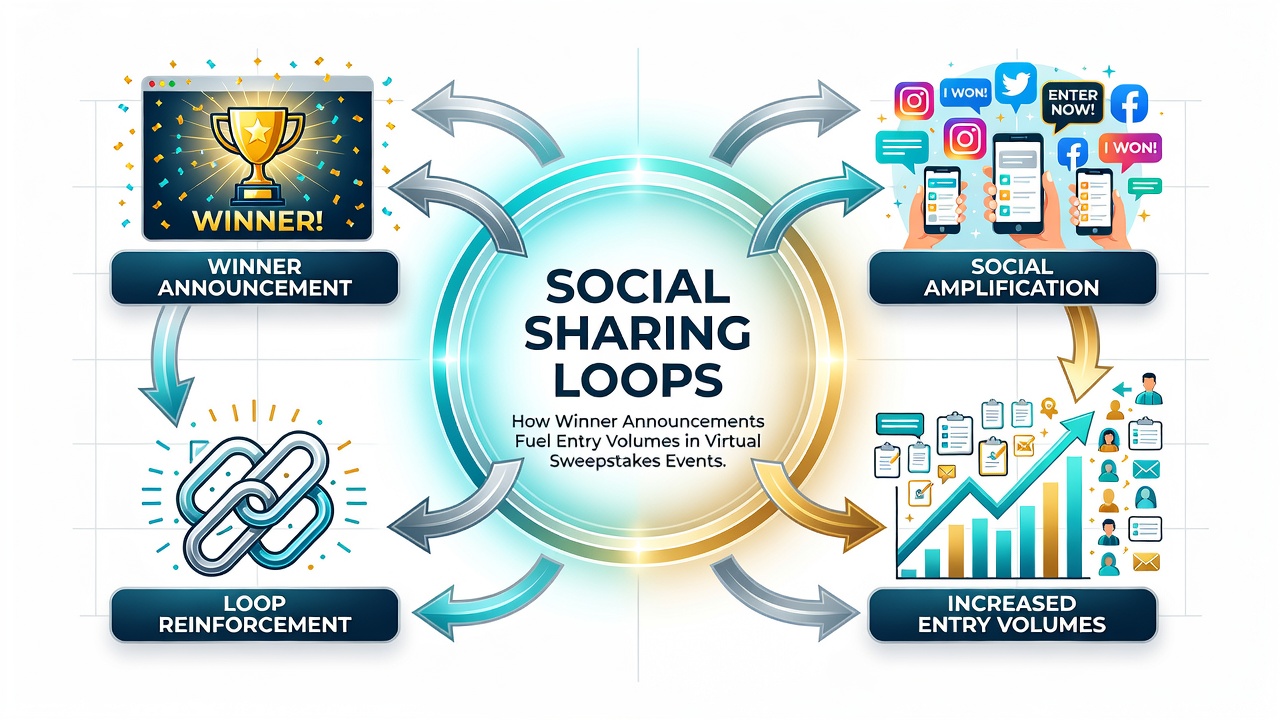
Winner announcements in virtual sweepstakes operate as catalysts for increased participation, and platforms track these patterns through entry volume metrics that rise following public reveals. Observers note that when results appear on social channels or site leaderboards, new submissions often climb within hours, driven by visible success stories rather than isolated marketing pushes.
Mechanics Behind the Spread
Public displays of winners trigger sharing behaviors across multiple networks, where recipients post screenshots or tags that reach extended circles of contacts. Data from platform analytics indicates these posts generate secondary views, and each view correlates with a measurable uptick in form submissions during the same 24-hour window. Researchers have documented that platforms using automated winner feeds see faster propagation compared to those relying solely on email blasts, because the visual element encourages immediate reactions and reposts.
Systems in place as of late 2026 integrate real-time alerts that coincide with peak social media hours, and operators report sustained entry growth over multi-day periods when announcements align with community events. One study of daily draw cycles found that volumes increased by factors ranging from 1.8 to 3.2 times baseline rates immediately after a publicized payout, with the effect compounding when winners share personal details like prize amounts or entry methods used.
Patterns Observed Across Platforms
Entry logs reveal clusters of activity that trace back to specific announcement moments, and analysts map these clusters to geographic regions where social density is higher. In November 2026, several major virtual sweepstakes operators noted parallel surges following coordinated winner spotlights timed around holiday periods, resulting in entry totals that exceeded prior monthly averages by notable margins. Those who monitor these systems point out that the loops strengthen when announcements include verification elements such as claim confirmations or winner interviews, lending credibility that prompts wider distribution.
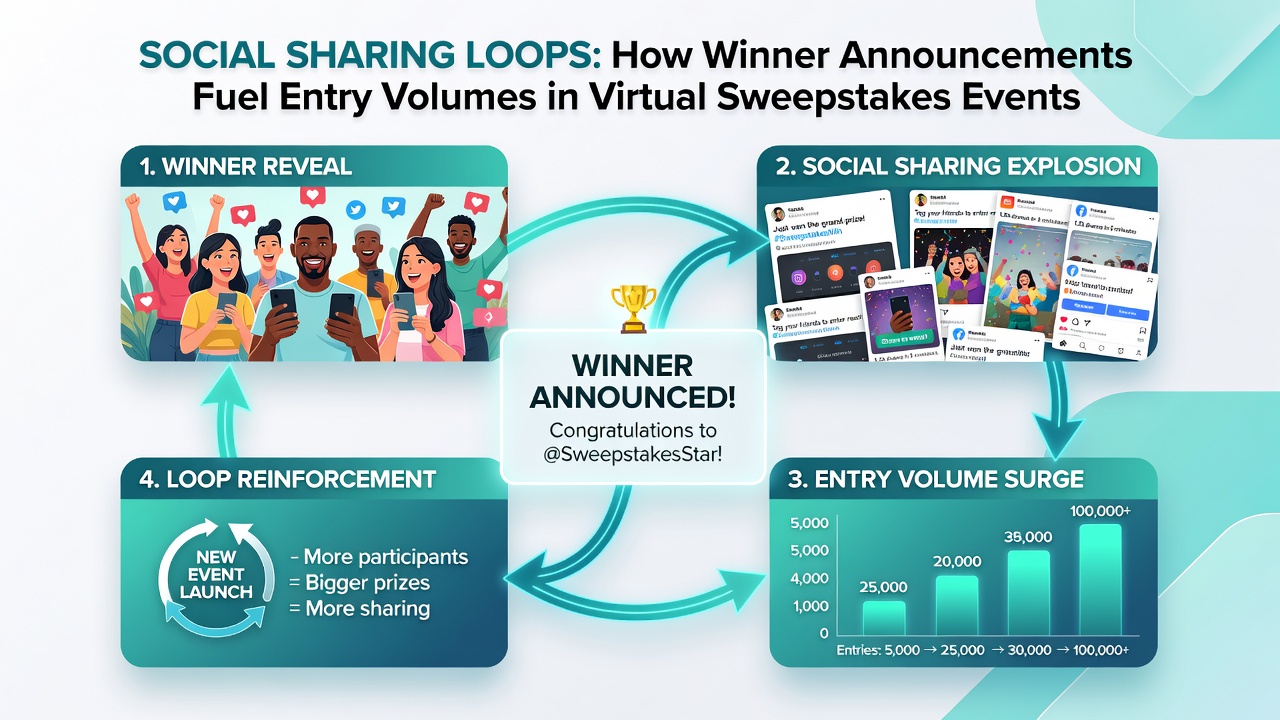
Cross-platform comparisons show that integrated sharing tools amplify the effect further, allowing direct reposts to external sites without leaving the sweepstakes interface. According to figures compiled by the Federal Trade Commission on consumer promotion practices, transparent result publication builds participant trust, which in turn sustains repeat engagement over successive events. Australian regulatory reviews echo similar observations, noting that visible prize distributions correlate with higher compliance and participation rates in digital formats.
Role of Timing and Format
Formats that combine text, images, and short video clips tend to achieve broader reach than text-only posts, and timing relative to user activity peaks determines how far the initial announcement travels before fading. Experts tracking these dynamics find that announcements released mid-week often maintain momentum longer into the following weekend, when casual users have more availability to complete entries. Platforms that segment their winner lists by prize tier also observe differentiated response curves, with larger jackpots generating more external shares while smaller wins drive localized community discussions.
Backend data further illustrates that referral codes attached to shared winner posts account for a growing percentage of new registrations, creating traceable pathways from announcement to action. In documented cases, a single high-profile winner post has initiated chains involving dozens of secondary entries, each linked through unique identifiers that confirm the social origin.
Conclusion
Virtual sweepstakes continue to demonstrate that structured winner announcements function as self-reinforcing mechanisms for entry growth, with observable patterns repeating across operators and timeframes. The combination of public visibility, social propagation, and measurable volume increases underscores the operational value of these announcements within digital contest ecosystems, and ongoing platform refinements aim to optimize the timing and presentation of results to sustain the observed effects.