Closing the Loop: Participant Insights Drive Refinements in Digital Sweepstakes Draw Systems
Carlo Otto · Nov 15, 2026
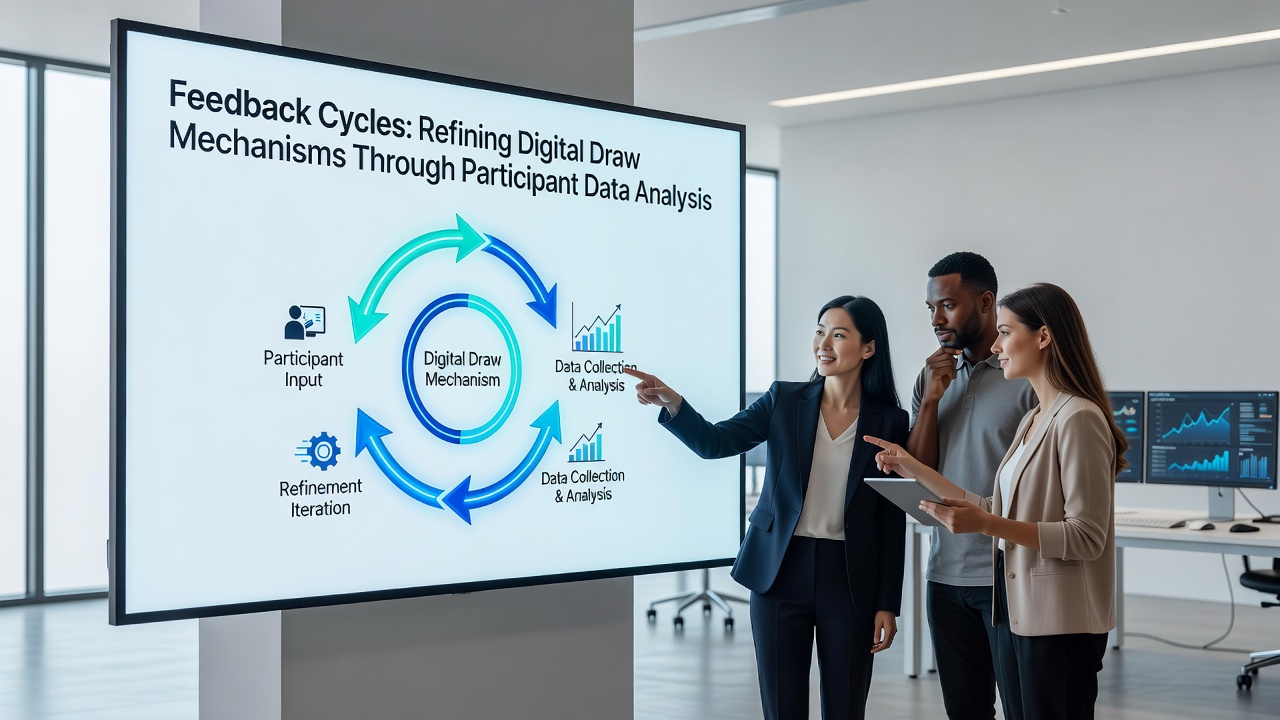
Closing the Loop: Participant Insights Drive Refinements in Digital Sweepstakes Draw Systems
Operators of online sweepstakes platforms collect entry patterns, winner notifications, and claim outcomes to identify where selection mechanisms require adjustment, and these feedback cycles operate continuously across multiple platforms. Data from millions of daily entries reveals clusters in geographic participation rates, device preferences, and timing behaviors that inform updates to random number generators and eligibility filters. In November 2026 several North American state regulators plan to release updated reporting templates that require operators to document how participant feedback has altered draw parameters during the prior quarter.
Entry Data Collection Points
Platforms record every submission timestamp, IP address range, and form completion metric before routing information into centralized analytics engines, while claim success rates and notification bounce logs add further layers to the dataset. Researchers at academic institutions have examined how these inputs correlate with selection frequency across repeated draws, and findings indicate that certain entry fields trigger automated reviews when volumes exceed historical baselines. Such monitoring allows teams to flag potential bottlenecks in the submission process without altering core randomization logic.
Algorithm Adjustments from Observed Patterns
Analysts compare actual winner distributions against expected statistical models and then modify weighting factors or seed values when deviations persist beyond acceptable thresholds. One documented case involved a multi-state promotion where participant data showed lower claim rates from mobile users, prompting developers to revise the post-selection verification sequence to reduce friction on smaller screens. Regulatory bodies in Australia and several Canadian provinces have published guidelines that encourage operators to maintain audit trails linking specific data signals to each algorithmic change.

Cross-Platform Data Sharing Mechanisms
Industry associations facilitate anonymized data exchanges so that lessons from one platform's feedback cycle can inform others facing similar entry volume spikes or regional eligibility questions. These exchanges typically occur through secure portals that strip personally identifiable information before aggregation, and participating operators receive quarterly summaries highlighting common refinement strategies. Observers note that such collaboration has accelerated adoption of standardized logging formats that simplify compliance reporting across jurisdictions.
Regulatory Reporting Requirements
Agencies including the Nevada Gaming Control Board and the Malta Gaming Authority require operators to submit summaries that detail how participant feedback influenced draw mechanism updates within specified periods. Reports must include quantitative measures such as changes in selection variance and qualitative descriptions of user-reported issues that prompted review. Data covering November 2026 submissions will likely reflect new emphasis on mobile claim pathways following increased participation through smartphone applications during the preceding year.
Security and Integrity Safeguards
Feedback cycles also feed into fraud detection modules that monitor for coordinated entry patterns or unusual claim clusters, and operators integrate these alerts with backend authentication systems to maintain prize distribution integrity. When anomalies appear, teams isolate affected draw cohorts and rerun selection processes under controlled conditions before releasing results. Academic studies from European research centers have analyzed how these layered checks reduce dispute rates while preserving the statistical properties required by law.
Future Refinement Pathways
Continued expansion of real-time dashboards allows operators to test proposed parameter shifts against historical datasets before full deployment, shortening the interval between identifying an issue and implementing a fix. Trade organizations project that by late 2026 most major platforms will incorporate automated suggestion engines that propose draw mechanism tweaks based on incoming participant metrics. These systems remain subject to human oversight and regulatory review to ensure changes align with fairness standards established by multiple oversight bodies.
Conclusion
Feedback cycles connect raw participant activity directly to the ongoing calibration of digital draw mechanisms, creating measurable improvements in eligibility handling, claim completion, and selection transparency. Operators that maintain clear documentation of each adjustment continue to meet evolving reporting demands from regulators across regions while sustaining trust in the underlying prize distribution process.